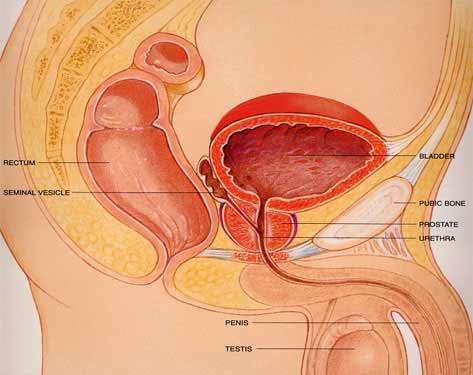
The prostate is a small male gland the size of a walnut that sits at the base of the bladder just in front of the bowel.
It surrounds the urethra (the tube that urine passes through from the bladder to the penis) and is part of the male reproductive system. Its function is to provide nutrients to sperm to aid in reproduction.
The three most common diseases that affect the prostate are:
- Benign Prostatic Hyperplasia (BPH)
- Prostatitis (infection of the prostate) and
- Prostate Cancer
Benign Prostatic Hyperplasia (BPH) is a benign growth of the prostate and is not cancerous. Commonly, as a man ages, the prostate enlarges. This growth of the prostatic tissue causes obstruction of the urethra and results in the symptoms of poor flow, hesitancy, stopping and starting during urination, waking at night to urinate and urinary frequency. If the symptoms become troublesome, they can be treated with medications initially and if these fail or are unsuccessful, they can then be treated with an operation known as a Transurethral Resection of the Prostate or TURP.
Prostatitis is due to infection or inflammation in the prostate. It can cause symptoms such as difficulty in urinatating, fevers, perineal (the area between the anus and the scrotum) pain, urinary frequency and urgency. It is often treated with antibiotics, however, some types of prostatitis can be difficult to treat.